Revolutionizing Urban Living: AI & IoT for Smarter Cities
The convergence of Artificial Intelligence (AI) and the Internet of Things (IoT) is transforming today's urban landscapes into intelligent, responsive, and sustainable ecosystems - a phenomenon we now know as the Smart City. This symbiotic relationship between AI and IoT is giving rise to innovative applications that enhance the quality of life, improve city services, and drive operational efficiency.
AI and IoT, when integrated, create a powerful data-driven platform that can analyze, predict, and optimize urban systems in real-time. From traffic management to waste collection, from public transport to crime prevention, the potential of AI and IoT in Smart City applications is vast and limitless.
AI-Powered IoT in Smart City Applications
AI's ability to process and interpret vast amounts of data generated by IoT devices makes it an indispensable technology for Smart City initiatives. AI algorithms can identify patterns, predict outcomes, and make data-driven decisions to optimize city operations.


In this context, AI algorithms can be trained on IoT data to provide predictive analytics and anomaly detection, enabling proactive responses to potential issues before they escalate. For instance, AI can analyze traffic flow data to predict congestion hotspots, allowing city officials to reroute traffic or adjust traffic lights in real-time.
AI for Infrastructure Management
AI can revolutionize infrastructure maintenance by facilitating predictive maintenance. IoT sensors collect data on infrastructure components and feed it to AI systems, which can then predict when certain components are likely to fail based on historical data and current conditions. This proactive approach can save cities significant maintenance costs and prevent catastrophic failures.
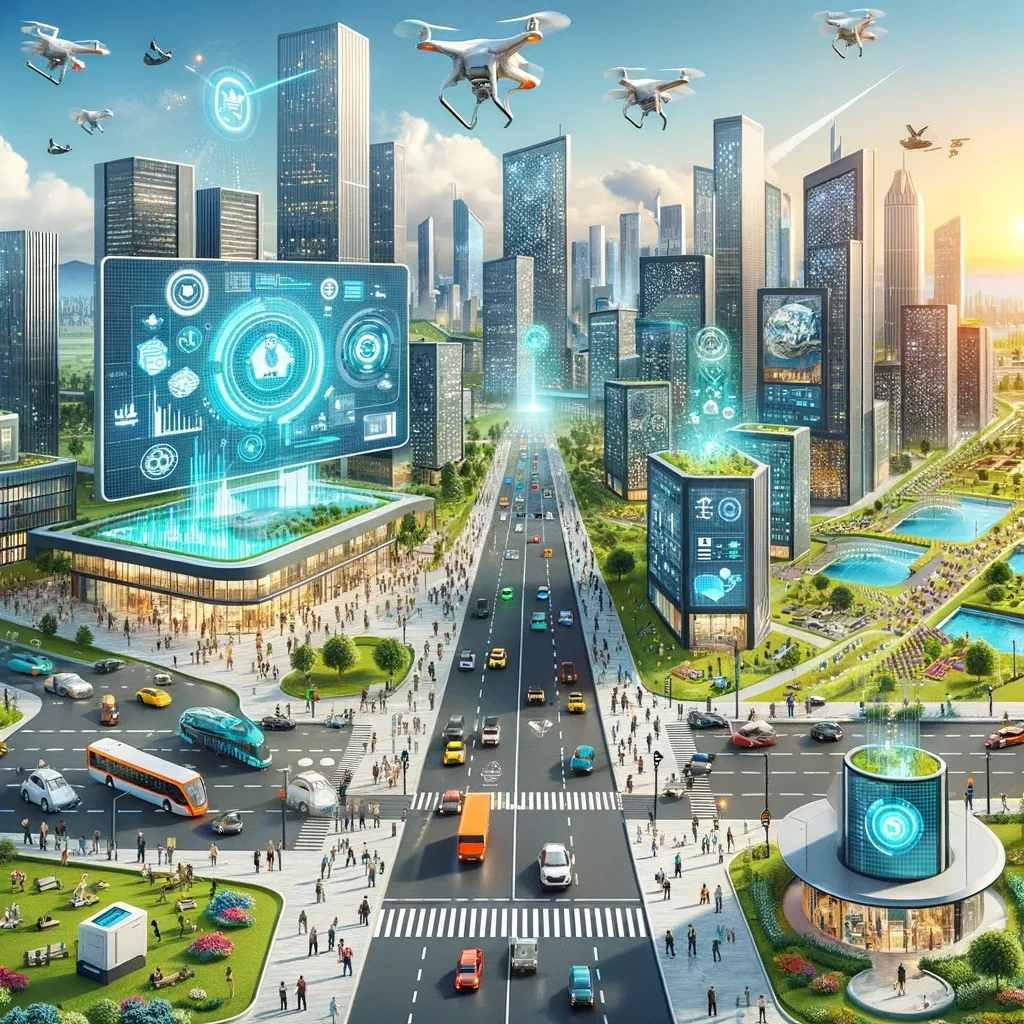


In the context of road infrastructure, AI can analyze data from sensors embedded in roads to detect cracks, potholes, and other damages. This information can be used to schedule maintenance work, ensuring that roads are safe and durable.
AI for Waste Management
AI-driven IoT systems can revolutionize waste management by optimizing waste collection schedules based on actual waste generation rates. Sensors installed on public bins and recycled material collection points transmit data to an AI system, which can then predict when a bin will be full and schedule a collection accordingly.
This smart waste management system not only reduces the number of unnecessary collection trips, thereby reducing fuel consumption and lower emissions, but also prevents overflowing bins from becoming an eyesore and a potential breeding ground for pests and diseases.


IoT-Enabled AI for Urban Services
The IoT serves as the data backbone of a Smart City, feeding AI systems with real-time urban data. By enabling real-time data collection and transmission, IoT devices allow AI systems to respond to changes and adapt to new conditions instantly.
In the realm of public transport, AI can use real-time passenger data from IoT-enabled Smart Cards or mobile apps to optimize bus routes, schedules, and fleet sizes. This can lead to more efficient and punctual bus services, reducing waiting times and improving passenger satisfaction.
IoT for Energy Efficiency
IoT-enabled sensors can monitor energy consumption across various city-owned buildings and public spaces, feeding this data into an AI system. The system can then identify energy waste and inefficiencies, and provide recommendations on how to reduce energy consumption and lower utility costs.


For instance, AI can analyze patterns in streetlight usage and dim or extinguish lights in areas with low foot traffic during certain hours, thereby saving energy and reducing costs.
IoT for Urban Safety and Security
IoT devices can enhance public safety and security by providing real-time notifications of potential threats or criminal activities. For example, AI-driven video analytics systems can monitor CCTV feeds to detect unusual activities, such as a person left unattended in a restricted area or a vehicle abandoned in a no-parking zone.
By integrating these IoT-enabled security systems with the city's command center, city officials can receive real-time alerts and dispatch law enforcement or emergency services promptly, thereby ensuring a quick response to potential threats.
Today's AI and IoT technologies are opening up a new frontier in urban development. They are creating an unprecedented opportunity for cities to become more sustainable, efficient, and livable. However, as with all technology-driven transformations, it's crucial to ensure privacy, security, and ethical considerations are at the heart of these Smart City initiatives. Looking ahead, we can anticipate an era where AI and IoT, in tandem, will continue to redefine how we live, work, and interact within our urban environments.
Related Articles

Smart Cities: Top Companies Revolutionizing Urban Living
The concept of smart cities has gained significant momentum in recent years, with companies worldwide racing to innovate and implement cutting-edge...
Revolutionizing Urban Living: Smart Cities Powered by AI
In the rapidly evolving landscape of urbanization, the concept of smart cities, bolstered by artificial intelligence, is transforming the way we envision and...
Smart City Images: View Stunning Photos of Utopian Urban Living
Imagine a bustling,—and yes, smart—cityscape. The sun sets, casting a warm, reddish hue on glass and steel skyscrapers. Sleek electric vehicles silently glide...

Urban Smart Storage: Revolutionizing Living in Lynden WA
In the heart of Lynden, Washington, a city known for its vibrant communities and rich history, a unique solution to urban living has emerged: smart storage...

Revolutionizing Cities: Smart Technology in Urban Design
The urban landscape is evolving, and at the forefront of this transformation is the concept of smart cities - urban areas that leverage technology to enhance...

Revolutionizing Cities: Smart Urban Farming System Project
The rise of urbanization has challenged conventional methods of farming, leading to innovative solutions like smart urban farming systems. These systems blend...