AI & IoT Transforming Smart Cities
In the dynamic landscape of urban development, the intersection of artificial intelligence (AI) and the Internet of Things (IoT) is transforming cities into smart, connected, and efficient hubs. Together, these technologies are driving innovation in transportation, infrastructure, and sustainability, redefining what it means to live and work in a modern city.
The application of AI and IoT in smart cities is vast and multifaceted. From real-time traffic management to predictive maintenance of public infrastructure, these technologies are unveiling new possibilities for urban planning and management. However, juggling these complex systems requires a delicate balance of technological prowess, data-driven decision making, and user-centric design.
Artificial Intelligence in Smart Cities
Artificial Intelligence, with its ability to process and learn from large datasets, is the brain behind smart city operations. AI algorithms can analyze patterns, make predictions, and automate decisions, creating a responsive and adaptive urban ecosystem.
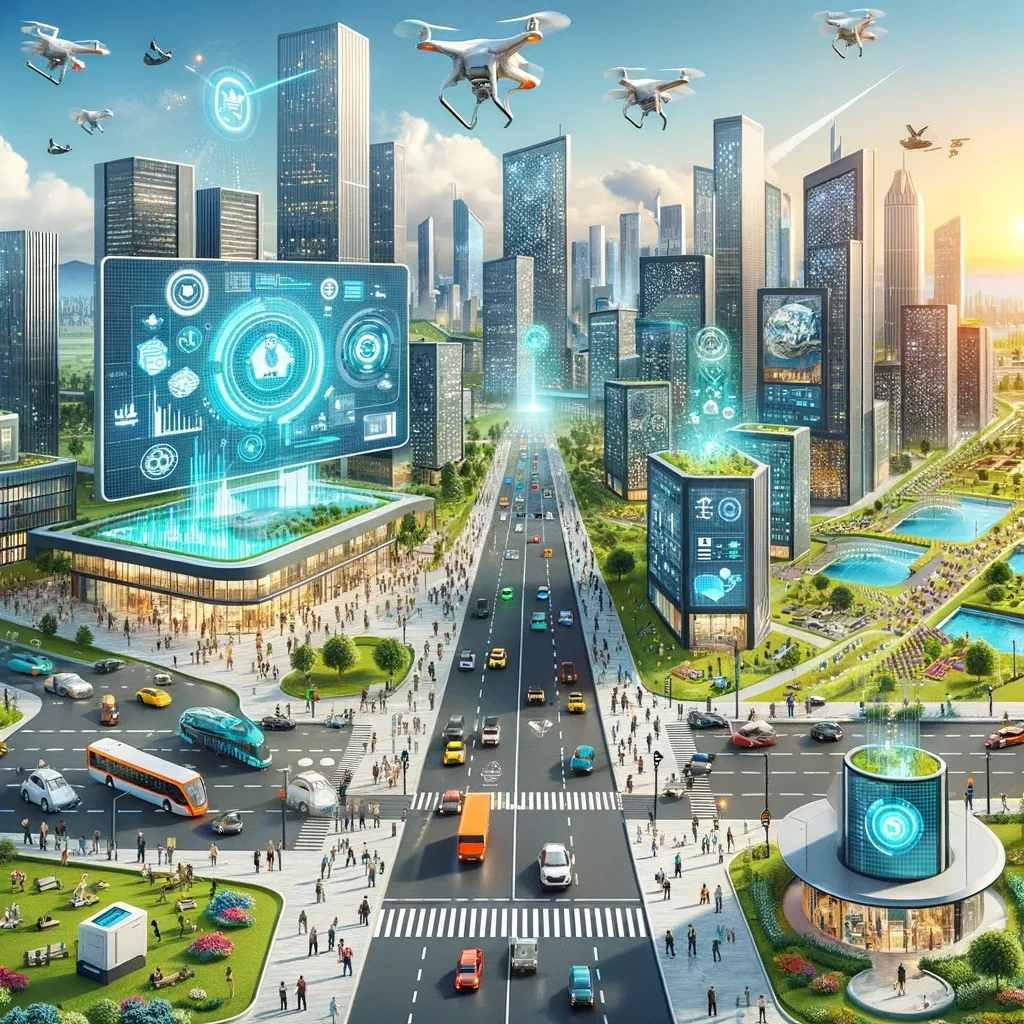


One of the most notable applications of AI in smart cities is predictive analytics. By using historical and real-time data, AI can anticipate future outcomes with a high degree of accuracy. For instance, it can predict maintenance needs on public infrastructure, or forecast traffic congestion, enabling proactive measures that mitigate potential issues.
The Role of Machine Learning
Machine Learning (ML), a subset of AI, plays a crucial role in smart cities. It empowers systems to learn from their environment and improve their performance over time without being explicitly programmed. For example, ML can optimize traffic light control systems, reducing congestion and fuel consumption.


Natural Language Processing (NLP), another ML application, is enhancing citizen engagement. It enables smart cities to interact with residents using voice assistants and chatbots, providing real-time information and addressing queries effectively.
Image and Video Processing in Smart Cities
Computer Vision, an AI field focused on enabling computers to interpret and understand digital images or videos, is revolutionizing urban surveillance and public safety. It can detect anomalies, monitor crowds, or identify unauthorized activities, alerting law enforcement in real-time.
The use of AI in smart cities is not limited to its inside; it extends to city management platforms. These user-friendly dashboards leverage AI to provide city officials with actionable insights, facilitating data-driven decision-making and improving the overall living experience.


Internet of Things: The Nerve Network of Smart Cities
The Internet of Things, with its vast array of sensors and connected devices, is the nerve network of smart cities. It enables real-time data collection, exchange, and application, creating a responsive urban landscape.
IoT devices are embedded in various aspects of city infrastructure, from street lights to waste management systems. They measure, monitor, and manage these systems, optimizing their performance and improving overall efficiency. For example, smart street lights equipped with motion sensors can adjust their brightness based on pedestrian traffic, reducing energy consumption and carbon emissions.
Smart Grids and Energy Management
IoT facilitates real-time energy monitoring and management, enabling cities to save costs and reduce their carbon footprint. Smart grids equipped with IoT devices can balance supply and demand, implement dynamic pricing, and minimize energy loss, making city operations more sustainable.


Similarly, IoT-enabled buildings can monitor their energy consumption, optimize HVAC systems, and leverage renewable energy sources more effectively, reducing overall energy demand and costs.
Smart Water Management
The IoT is transforming water management, helping cities to conserve this precious resource and reduce water loss. IoT sensors can monitor water quality, detect leaks, and analyze water usage patterns, enabling proactive maintenance and efficient resource allocation.
In addition, real-time data collection and analytics can help prevent water pollution by quickly identifying and addressing contamination sources, ensuring public health and safety.
As we move forward, the synergy of AI and IoT will continue to reshape our cities, making them more livable, sustainable, and efficient. However, achieving this vision requires comprehensive planning, public engagement, and a commitment to digital equity. By embracing these challenges, we can unlock the full potential of AI and IoT in smart cities, fostering a brighter, more connected urban future.
Related Articles

Smart Cities: Transforming Life Quality
In an era where urbanization is sweeping the globe,standing out as a beacon of sustainability and efficiency are smart cities. These aren't just urban spaces...

Transforming Saudi Arabia: The Rise of Smart Cities
In the heart of the Middle East, Saudi Arabia has emerged as a global leader in embracing the digital revolution, with smart cities playing a pivotal role in...

Pros and Cons of Smart Cities: Weighing Advantages and Disadvantages
Smart cities, powered by IoT, AI, and data analytics, promise a future where urban infrastructure is efficient, sustainable, and responsive to its inhabitants'...

2030 Jamaica Smart Cities List
As we accelerate towards 2030, the global momentum for urban innovation and sustainability is pixelating cities into smart ones. Jamaica, an archipelago nation...

"BEC Smart Hama Altex: Transforming Your Home with Smart Technology"
Discovering the right smart home system can transform your house into a modern, intuitive space. One brand that stands out in the arena of smart home...
Growth of Smart Cities: A Modern Urban Revolution
Imagine a city where technology and urban planning intertwine to create a harmonious, sustainable ecosystem. A place where buildings communicate with each...