AI-Driven Smart Cities: The Future of Urban Living
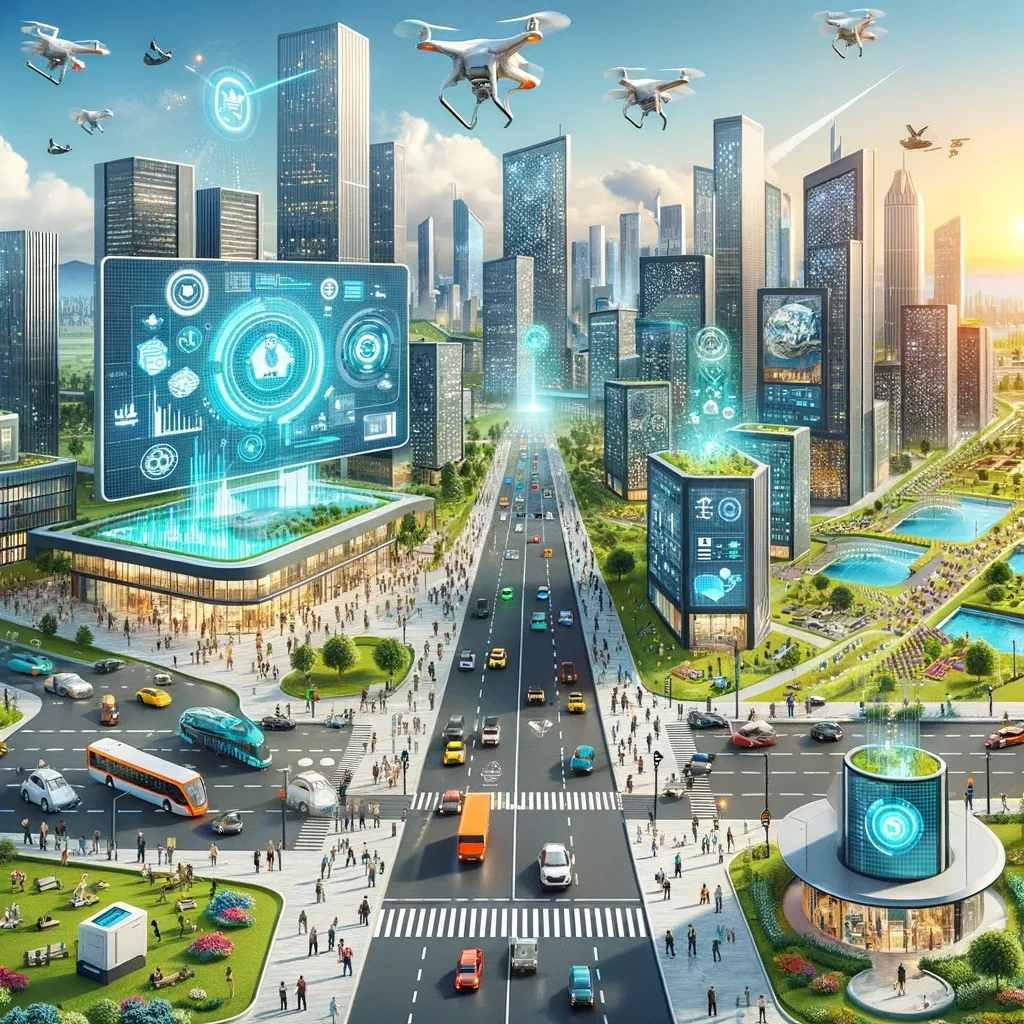
Picture this: a bustling cityscape where traffic flows seamlessly, waste is minimized, and every resident enjoys efficient, sustainable services. Welcome to the era of AI-driven smart cities, where technology is transforming metropolises worldwide, making urban living more efficient, sustainable, and enjoyable.
The concept of smart cities isn't new, but Artificial Intelligence is taking it to unprecedented heights. AI, with its pattern recognition, predictive analytics, and automated decision-making capabilities, is the driving force behind many innovations shaping tomorrow's cities.
A Smarter Grid: AI in Urban Energy Management
In the heart of every city lies a complex network of power lines and transformers. AI is making these electrical grids smarter, more efficient, and robust. AI algorithms can predict equipment failures, optimize power distribution, and even balance renewable energy sources.


A case in point is Austria's largest wind farm, which uses AI to optimize energy production and reduce grid strain by predicting turbine faults up to a week in advance.
Predictive Maintenance
AI-driven predictive maintenance systems analyze vast amounts of data from sensors and weather forecasts to anticipate equipment failures. This proactive approach helps utilities minimize downtime, reduce maintenance costs, and enhance safety.


For instance, the company aeSolutions uses AI to predict power grid failures, helping utilities prevent outages and save millions each year.
Demand Response Programs
Demand response programs incentivize consumers to reduce energy usage during peak hours, helping utilities manage grid demand. AI takes this a step further by analyzing data on consumer behaviors, weather patterns, and other factors to predict demand and optimize power distribution.
Pilot studies in the U.S., such as those led by the nonprofit Smart Electric Power Alliance, have demonstrated the potential of AI in demand response programs, resulting in substantial energy savings and reduced strain on the grid.


Intelligent Mobility: AI in Urban Transportation
Traffic congestion and pollution are persistent challenges in many cities. AI is helping address these issues by optimizing traffic management, routing, and even autonomous driving.
From real-time traffic analytics to autonomous vehicles, AI is transforming urban mobility.
Dynamic Traffic Management
AI systems like SCOOT in the UK and Rhabit in Australia use real-time traffic data to optimize traffic light cycles, reducing commuting times and fuel consumption. By predicting traffic flow, AI can minimize congestion and pollution.


In CityMobil2, an EU-funded project, AI-powered systems enhanced public transport in six European cities, leading to improved passenger satisfaction and reduced travel times.
Autonomous Vehicles
AI is the backbone of autonomous vehicles, enabling them to navigate safely, make decisions, and communicate with other vehicles and infrastructure. While still a work in progress, companies like Tesla, Waymo, and NVIDIA are at the forefront of AI-driven autonomous driving technology.
Singapore's VenueXY project harnesses AI to enable driverless taxis, transforming urban public transportation and paving the way for a future where roads are safer, cleaner, and more accessible.
As AI continues to shape our cities, the future of smart urban living brims with possibilities. From optimizing energy usage to redefining mobility, AI-driven innovations are set to make our cities more efficient, sustainable, and livable. The time is now to embrace these changes and build an AI-driven future where every city can thrive. Let's not just dream of smart cities; let's make them a reality.
Related Articles

Urban Smart Growth:transforming cities for a sustainable future
Experience the intersection of urban development and technological innovation with urban smart growth, a modern approach to city planning that's redefining our...

Smart Eco Cities: The Future of Sustainable Living
In the era of rapid urbanization and climate change, the concept of smart eco cities has emerged as a beacon of sustainable urban development. These cities...

Smart Cities: Top Companies Revolutionizing Urban Living
The concept of smart cities has gained significant momentum in recent years, with companies worldwide racing to innovate and implement cutting-edge...
Revolutionizing Urban Living: Smart Cities Powered by AI
In the rapidly evolving landscape of urbanization, the concept of smart cities, bolstered by artificial intelligence, is transforming the way we envision and...
AI-Driven Urban Innovations: The Future of Cities
The intersection of artificial intelligence and cities is an exciting topic, ripe with potential and innovation. AI is revolutionizing urban planning...

Smart Pods Review: Unveiling the Future of Living
Imagine transforming your commute into a productive, comfortable, and even luxurious experience. Welcome to the world of smart pods, the next evolution in...