"AI in Urbanism: Revolutionizing City Planning"
Urbanisation has been a defining trend of the 21st century, with more than half of the world's population now living in urban areas. As cities grow and evolve, so does the need for innovative solutions to manage their complexities. Artificial Intelligence (AI) is increasingly proving its mettle in this domain, revolutionizing urbanism and shaping future cities.
AI in urbanism, often referred to as 'Smart Cities', is an interdisciplinary field that leverages data, algorithms, and automation to optimize urban systems and enhance quality of life. It promises to tackle critical challenges such as traffic congestion, waste management, and environmental sustainability, all while improving services and engaging citizens.
AI-Driven Urban Planning and Design
Abyantika Ash tackled this topic in her TED Talk, "The city of the future: How artificial intelligence could transform urban life."

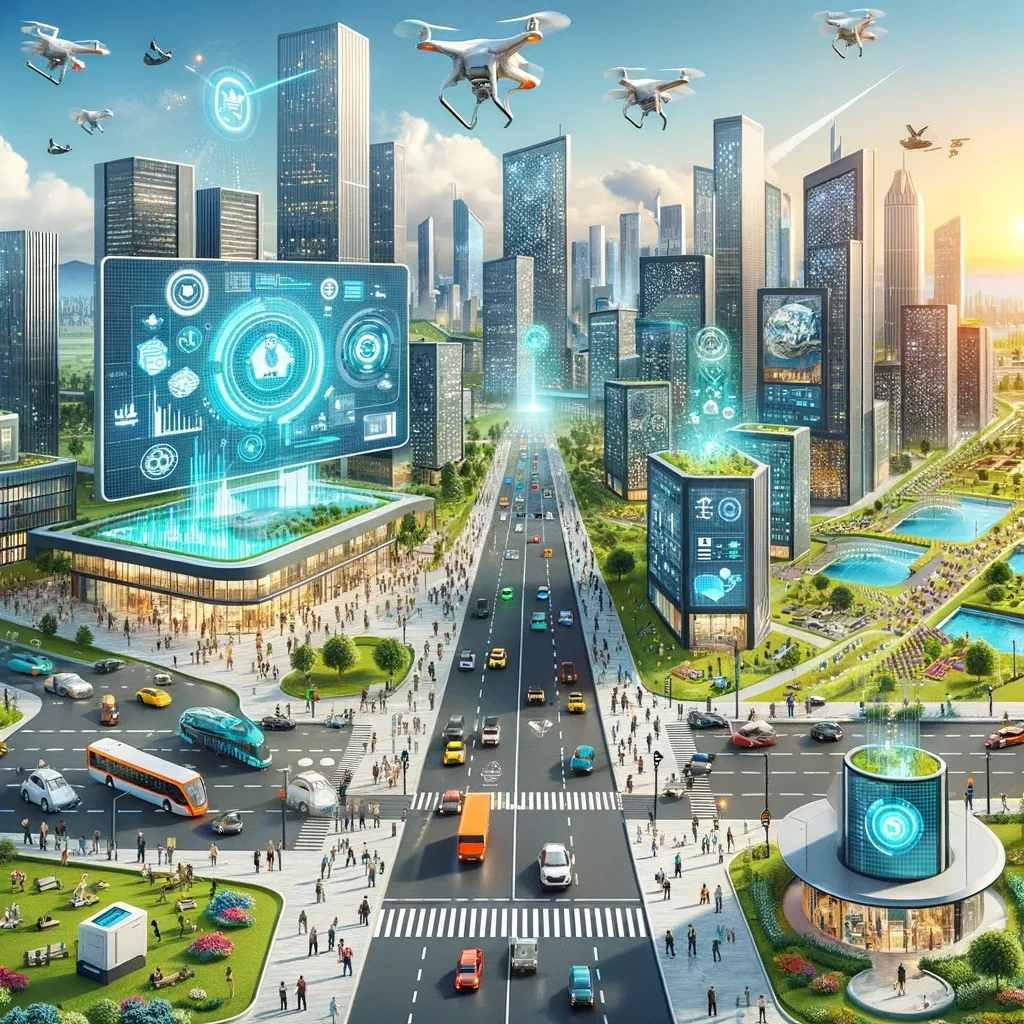

AI algorithms can now analyze vast amounts of data to predict urban growth patterns, traffic flow, and infrastructure needs. They can simulate city layouts to optimize resources and minimize environmental impact, informing urban planning decisions. For instance, IBM's CityOne platform uses AI to design and modeling cities, enabling planners to test various scenarios before implementation.
Predictive Modeling
The heart of AI in urban planning lies in predictive modeling. By learning from historical data and real-time inputs, these models can forecast future urban needs. For example, urban growth patterns can be predicted based on past trends and current environmental and socio-economic factors, guiding land use planning and infrastructure development.


Similarly, traffic flow can be predicted and optimized using AI. SCOOT, a UK-based traffic management system, uses AI to monitor and control traffic signals in real-time, reducing congestion and improving traffic flow.
Parametric Urban Design
Parametric urban design, or rule-based design, uses algorithms to generate multiple design alternatives based on pre-set parameters. This approach allows planners to explore a wide range of options quickly and efficiently, fostering innovation and informed decision-making.
A notable example is MIT's CityScope, a tactile Urban Information System that uses parametric design to model and simulate urban growth and development. It enables citizens, planners, and policymakers to collaborate and co-create inclusive urban strategies.


AI and Citizens: Engagement, Services, and Governance
AI isn't just transforming the back-end systems of cities; it's also revolutionizing citizen engagement and services.
AI chatbots can provide 24/7 customer service, answering queries about city services, public transportation, and more. For instance, Microsoft's AI-powered chatbot in New York City helps residents find information about local services, events, and city updates.
Citizen Engagement and Data Democracy
AI can enhance citizen engagement by making urban data more accessible and understandable. Platforms like Citizen Labs use AI to transform urban data into interactive visualizations, enabling citizens to participate in data-driven decision-making processes.


However, AI also raises concerns about data privacy and digital divide. Ensuring responsible data collection, storage, and usage, along with universal access to AI services, are critical challenges in this domain.
AI for Urban Governance and Policy
AI can assist urban policymakers and administrators in data-driven decision-making. By analyzing vast amounts of data, AI can identify trends, evaluate policy impacts, and suggest evidence-based interventions. For example, Dubai's AI-driven strategy aims to make the city the world's smartest by 2021, with AI applied across various sectors, including transportation, renewable energy, and education.
However, AI's complex nature and rapid evolution necessitate continuous education and capacity building for policymakers and administrators. It's crucial to ensure AI is understood and utilized responsibly for the betterment of urban communities.
The future of AI in urbanism is excitably promising, with ongoing research and implementation in areas ranging from climate change adaptation to waste management. Yet, it's not just about the technology; it's about people, fairness, and inclusivity. As AI continues to shape our cities, investing in the right resources, policies, and partnerships will be key to ensuring AI benefits all urban residents.
Related Articles

Smart Design NYC: Innovative City Planning
New York City, a global metropolis renowned for its dynamic culture and unparalleled architecture, has always been a beacon for innovative design. In recent...

City Planning & Smart Growth: An Urban Evolution
City planning and smart growth are not just buzzwords but critical aspects in shaping our urban landscapes today. As cities worldwide struggle with issues such...

Small City Builder Games: Top Choices for Urban Planning
In the vibrant world of simulation games, the backdrop of small city builder games never fails to captivate. Unlike colossal mega-cities, these games offer a...
Smart City Planning Examples
In the rapidly evolving landscape of urban development, smart city planning has emerged as a transformative approach that leverages technology, data, and...

Real-Time City Big Data: Smart Urbanism'sGeoJournal
Imagine a city-wide digital nervous system, a vast array of IoT devices, sensors, and connected infrastructure continuously collecting, processing, and...
Real-Time City Big Data & Smart Urbanism
The intersection of big data and smart urbanism has given rise to a revolution in city management and planning, transforming urban landscapes into...