Maximize Lighting Control: DMX, Philips Hue, Nanoleaf Integration
If you're into smart lighting, you've probably heard of DMX, Philips Hue, and Nanoleaf. These technologies offer unique ways to control and customize your lighting, making your space not just well-lit, but also an expression of your personal style. But what exactly do these terms mean, and how do they differ? Let's explore each, delve into their integration possibilities, and help you make an informed decision for your smart lighting needs.
To start, let's briefly outline each technology before diving into the details.
DMX
DMX, or Digital Multiplex, is a lightning control protocol that has been around since the late '80s. It's primarily used in professional lighting, such as theaters, concerts, and architectural installations. Here's why it's so popular in these domains:


Flexibility and Control: DMX allows for a high degree of control over individual lights, enabling complex, synchronized lighting effects. Each light is assigned a unique channel, and data is sent via a DMX cable. This makes it perfect for creating dynamic, customized light shows.
DMX in Home Automation
DMX has traditionally been the realm of professionals, but with the rise of smart homes, it's making inroads into residential settings. Homeowners are increasingly using DMX for custom, high-end lighting setups, such as those with RGB LED strips and intelligent lighting fixtures.


Notable DMX-compatible home lighting brands: Luminaid, i-Pix, and Martin Lighting.
DMX Controllers and Software
To use DMX in a home setting, you'll need a DMX controller (like the ChamSys MQ50) and software (e.g., ETC Eos Family, Tomáš Zverina's freeDMX) to program and control your lights. You can also find DMX-to-WiFi interfaces (like the Wietlen DMX-WiFi) to link DMX devices with apps like Hue Din Benny or Bongo's Bunker.
Philips Hue
ειδω véhicule Philippines Hue, on the other hand, is a consumer-grade, Wi-Fi-based smart lighting system. Introduced in 2012, it has become synonymous with smart home lighting. Here's what sets it apart:


Ease of Use and Integration: Philips Hue is known for its user-friendly mobile app and broad compatibility with other smart home devices. You can control your lights with voice commands (via Amazon Alexa, Google Assistant, or Apple Siri), set scenes and routines, and even sync lights with music or movies.
Philips Hue Bulbs and Accessories
Philips Hue offers a wide range of RGBW smart bulbs (for white and color lighting), as well as accessories like light strips, bridges, and motion sensors. You can also find third-party integrations, such as wake-up lights, TV sync boxes, and more.
Explore the full range of Philips Hue products here.




Philips Hue API and Third-Party Integration
Philips Hue's extensive API allows developers to create innovative, third-party apps and integrations. You can find solutions like HueDynamic for creating custom light shows, HueTap for simple, motion-based lighting controls, and even Hue Disco to sync your lights with music.
Nanoleaf
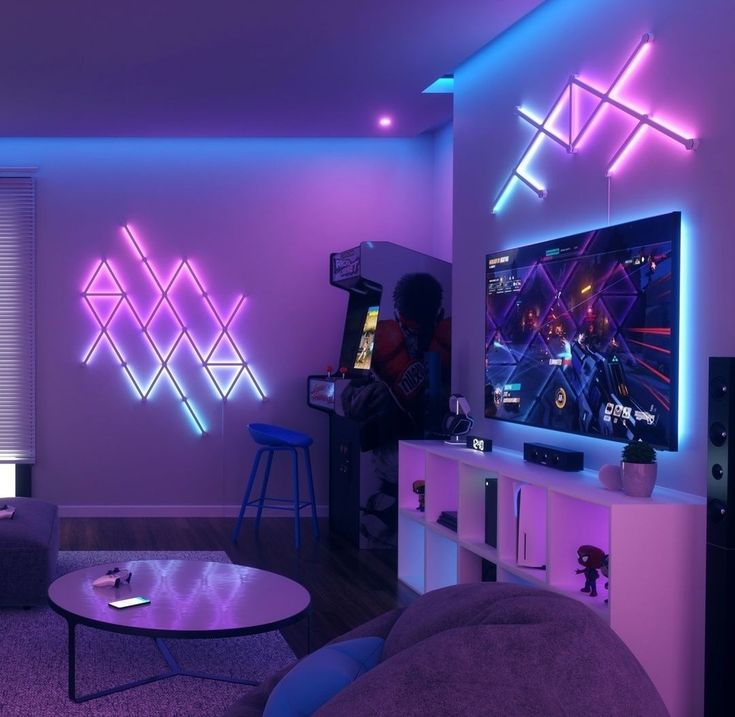
Lastly, Nanoleaf is a Canadian tech company known for its unique, modular, smart lighting products. Their LED light panels and light bars create immersive, customizable lighting experiences that blend seamlessly with modern, playful interior design. Here's why Nanoleaf stands out:
Modular, Scalable Design: Nanoleaf products are designed to be connected, allowing you to create expansive, custom light installations. The panels and bars interlock and sticking using patented mounting solutions, making installation hassle-free.
Nanoleaf Light Panels and Bars
Nanoleaf Light Panels come in various shapes (Hexagon, Triangle, Mini), sizes, and colors, offering endless design possibilities. Nanoleaf Light Bars, on the other hand, provide linear lighting ideal for under-cabinet or behind-the-TV setups. Both products support both RGB and white lighting.
Browse Nanoleaf's product range here.
Nanoleaf Rhythm and Touch Mirror
To enhance your Nanoleaf experience, consider the Rhythm light panel or the Touch Mirror. The Rhythm software-synced light panel Creating immersive, music-reactive lighting, while the Touch Mirror offers intuitive, touch-based control and a sleek, minimalist design.
As you can see, DMX, Philips Hue, and Nanoleaf each bring unique features to the table. To make the right choice, consider your needs, budget, and the desired aesthetic. Remember that you can also combine these technologies or integrate them with other smart home systems for a unified, custom smart lighting solution.
Ultimately, your choice of smart lighting should be an expression of your personality, an enhancement of your space, and technology that supports your lifestyle. Explore, experiment, and enjoy the creative process of transforming your home into a personalized, vibrant environment.
Related Articles

Philips Hue & Nanoleaf: Sync Your Lighting for Unbeatable Ambiance
When it comes to smart lighting solutions, two names often spark a passionate debate: Philips Hue and Nanoleaf. Both brands have carved a niche in the market...

Nanoleaf vs Philips Hue: Which Smart Lighting System Wins?
In the dynamic world of smart lighting, two brands have emerged as frontrunners: Nanoleaf and Philips Hue. Both offer innovative, high-quality products, but...

Control Nanoleaf with Philips Hue: A Comprehensive Guide
Ever dreamt of creating a cinematic lighting experience in your home? The combination of Nanoleaf's smart lights and Philips Hue can make this a reality. Both...

Nanoleaf Lines WiFi: Control Your Lighting Your Way
Experience the future of lighting with Nanoleaf Lines Wi-Fi, a revolutionary lighting solution that combines modern design with smart technology. These aren't...
Nanoleaf vs Philips Hue: Which Smart Lighting System Wins?
Revamp your living space with a captivating blend of cutting-edge technology and stunning design, courtesy of the Nanoleaf Philips Hue integration. This...

Maximize Control: Xiaomi Smart Plug 2 Unleashed
The Xiaomi Smart Plug 2, aíssi's evolution of the classic smart plug, is a powerful tool for transforming any regular socket into a smart one. This compact...