Do All Toilets Have P Traps?
Ever wondered why your toilet seems to have a curved pipe under it? That's not just some odd plumbing fixture; it's a critical component known as a P-trap. But does every toilet have one?
To understand the necessity of P-traps in toilets, we need to delve into their function and the history of plumbing. P-traps prevent sewer gases from entering your living space while allowing liquids to flow freely. Their unique design forms a water seal that traps these unpleasant odors and prevents them from creeping back up into your home through the drain.
Understanding P-Traps: A Brief History
P-traps trace their origin back to the early 19th century, when Thomas Crapper - yes, that Crapper - invented the valve-operated toilet. However, it was his contemporary, Alexander Cumming, who first included a U-bend in the drainpipe to trap water and thereby prevent sewer gas from escaping. This design is the precursor to today's P-trap.


Over time, the U-bend evolved into the modern P-trap, with the addition of an extra slant to enhance its water-trapping capabilities.
Design and Functions of P-Traps
P-traps feature a distinctive 'P' shape, with the narrow end pointing downwards. This design hosts a water seal, usually around 1.5 to 2 inches deep. When water from your toilet or sink drains, it fills this portion of the trap, creating a barrier against sewer gases.


The P-trap's design also allows for easy maintenance and cleaning. Since it's located beneath the toilet or sink, professionals can quickly access it for unclogging or replacing, as needed.
P-Traps in Toilets: An Essential Formula
Given their critical role, P-traps are not an optional fixture in toilets. Every toilet must have a P-trap to comply with building codes and keep your home safe and odor-free. This standard applies to new installations and renovations alike, making the P-trap an essential component of any bathroom design.
Moreover, consistently running water through your toilet helps maintain an effective seal in the P-trap. This is why flushing the toilet regularly is crucial, even when not in use.


Exceptions and Alternatives: When a P-Trap Isn't Possible
While P-traps are the norm, there are rare instances where their installation isn't feasible. For example, in some bathroom designs or when attempting to connect multiple toilets to a single waste line, alternative solutions may be required.
A good alternative would be an S-trap, which serves the same purpose but takes a different shape. Another option is using a wye fitting followed by an inverted S-trap. However, these alternatives should only be used under the guidance of a certified plumber and when absolutely necessary.
Potential Pitfalls: When P-Traps Go Wrong
Like any functioning part of a toilet, P-traps can face issues. The most common are clogs, often caused by hygiene products or waste material. Regular maintenance, along with careful disposal of non-flushable items, can prevent these issues.

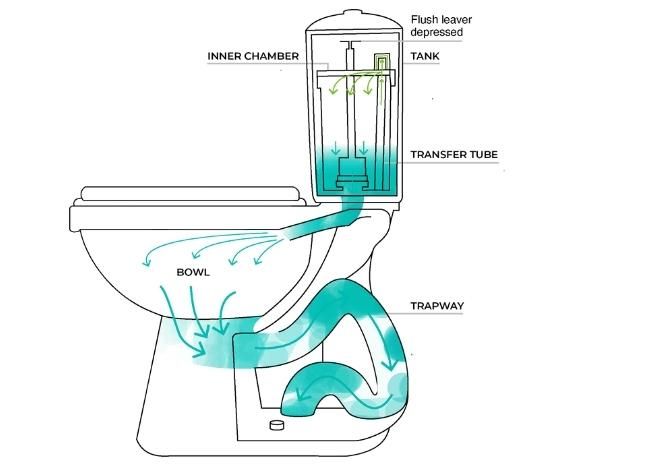


Additionally, P-traps can dry out if not used for a prolonged period. This breaks the water seal, allowing sewer gases to enter the home. To prevent this, it's essential to flush toilets regularly, even if they're not in use.
In conclusion, whether you're installing a new toilet or maintaining an existing one, understanding and caring for the P-trap is crucial for a safe and odor-free home. By keeping your toilet's P-trap in good working order, you'll not only protect your home but also ensure that your bathroom remains a comfortable and pleasant space. So, remember to have your P-trap checked regularly, and never hesitate to contact a professional if you suspect any issues.
Related Articles

RV Toilets: Do They Have Traps?
If you're new to RVing or contemplating your first camper, you might be wondering about the intricacies of your recreational vehicle's toilet system. One...

RV Toilets: Do They Have P-Traps?
Ever contemplated the innards of your RV's bathroom? You might be wondering, "Do RV toilets have P traps, like the ones in our household?" The short answer is...

RVs & P-Traps: Unraveling the Connection
When it comes to recreational vehicles (RVs), many people have questions about their plumbing systems. One common query is whether RVs have P traps. The short...
Why toilets NEED P-Traps: Essential Plumbing Facts
The plumbing design of your home plays a significant role in maintaining a healthy and safe living environment. One of the most common questions homeowners and...
Do RV Toilets Have A P-Trap?
When considering an RV toilet, one of the most common questions that comes up is: "Do RV toilets have an S-trap?" The S-trap, or P-trap, as it's more commonly...

BeautyRest Mattresses: Do They Use Memory Foam?
Are you considering purchasing a BeautyRest mattress, and wondering if it incorporates memory foam? BeautyRest, a well-known brand under the Serta Simmons...