NODEMCU & ESP32: Exploring Key Features
The ESP32, a powerful IoT chip developed by Espressif, has become a game-changer in the world of embedded systems, especially with its integration with NodeMCU firmware. The NodeMCU ESP32, also known as the ESP32's open-source version, offers a wide array of features that make it one of the most popular choices for hobbyists and professionals alike. In this article, we will delve into the exciting features of the NodeMCU ESP32 that make it stand out in the world of microcontrollers.
Before we dive into the specifications, it's crucial to understand that the ESP32 is an upgrade from its predecessor, the ESP8266. While the ESP8266 was a significant step up from the earlier microcontrollers, the ESP32 further enhances the capabilities, offering more GPIO pins, better performance, and a plethora of other features. Now, let's explore the features that make the NodeMCU ESP32 a potent tool.
Hardware Features of NodeMCU ESP32
The NodeMCU ESP32 boasts a robust set of hardware features that make it an attractive option for various projects. Here, we will discuss two of the most notable hardware features.


Dual-Core Architecture
One of the standout features of the ESP32 is its dual-core architecture. This consists of two processor cores, each running at 240 MHz, offering a significant boost in performance compared to the ESP8266. The dual-core architecture allows for better multitasking, enabling the ESP32 to handle multiple tasks simultaneously. This is particularly useful in applications that require real-time data processing and control.
To illustrate this, consider a project where you need to continuously monitor sensor data and control actuators. With the ESP32's dual-core architecture, you can run the sensor data reading and processing in one core while the other core handles the control tasks, ensuring smooth and efficient operation.


GPIO Pins
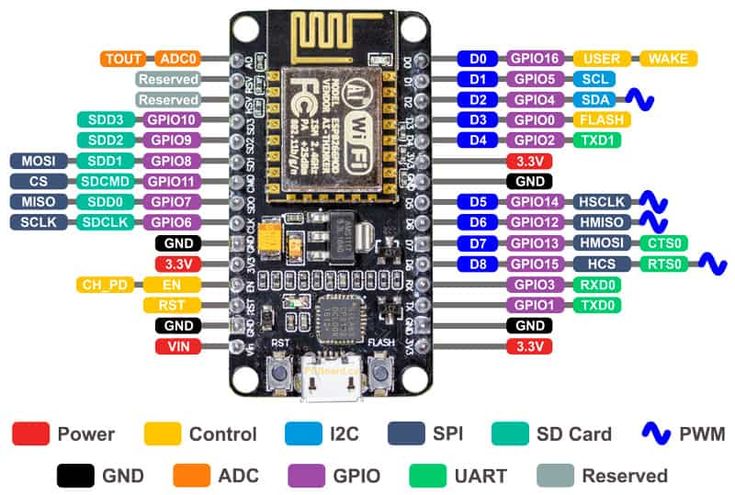
Another prominent feature of the NodeMCU ESP32 is its increased number of GPIO pins. While the ESP8266 has 17 GPIO pins, the ESP32 offers 34 GPIO pins, providing more flexibility in project design. These GPIO pins can be configured as inputs, outputs, Pulse Width Modulation (PWM) pins, or I2C/SPI/UART pins.
For instance, if you're building a smart home project, you might need to control multiple devices like lights, switches, and sensors. With the ESP32's 34 GPIO pins, you can easily connect and manage all these devices, making the project more complex and rewarding.
Software Features of NodeMCU ESP32
The NodeMCU ESP32's software features, made possible by the open-source firmware, further enhance its capabilities. Here, we will explore two significant software features.


Wi-Fi and Bluetooth Connectivity
One of the most remarkable software features of the NodeMCU ESP32 is its built-in Wi-Fi and Bluetooth connectivity. The ESP32 can connect to both 2.4GHz and 5GHz Wi-Fi bands, and it supports both Bluetooth and Bluetooth Low Energy (BLE) standards. This makes it ideal for IoT projects that require wireless communication.
For example, you can use the ESP32 to create a smart Wi-Fi light bulb that can be controlled via a mobile app, or a BLE-enabled smartwatch that syncs data with your smartphone. The flexible and robust connectivity options make the NodeMCU ESP32 a versatile tool for a wide range of projects.
Customization and Compatibility
The NodeMCU ESP32's open-source firmware allows for a high degree of customization. You can flash custom firmware, like nRF52 Bootstrap or ESP-IDF, to the ESP32, expanding its functionality and compatibility with other devices and systems. Moreover, the ESP32 is compatible with a wide range of tools and libraries, making it easy to incorporate into existing projects or to develop new ones.


For instance, you can use the Arduino IDE to program the ESP32, or you can use the Espressif's ESP-IDF framework for more advanced and customized projects. The ESP32's compatibility with various tools ensures that you can use it with your existing ecosystem, saving time and resources.
In the dynamic world of IoT and embedded systems, the NodeMCU ESP32 stands out as a powerful and versatile microcontroller. Its robust hardware features and flexible software capabilities offer endless possibilities for innovation and creativity. From smart home devices to complex IoT networks, the NodeMCU ESP32 is a tool that empowers both veteran engineers and hobbyist dabbling in the fascinating world of microcontrollers. So, why not roll up your sleeves and dive into the exciting realm of the NodeMCU ESP32 today?
Related Articles

Samsung Galaxy Fit 3: Exploring Features & Functions
The Samsung Galaxy Fit 3, a sleek fitness tracker, has taken the spotlight in the world of wearable technology. This compact device is not just another gadget...

Windows 10: Exploring Key Virtual Machine Features
Windows 10, a testament to Microsoft's continued evolution in operating systems, boasts an array of features that cater to both casual and power users. Among...

Microsoft 365: Exploring Key Office Features
Unlocking productivity and collaboration, Microsoft 365 has evolved the traditional Office suite into a robust, cloud-based platform. With an array of features...

Level Up Your Calls: Exploring Premium Video Calling Features in Google Meet
In today's fast-paced, interconnected world, effective communication is not just an advantage, it's a necessity. Google Meet, with its suite of premium video...

Xiaomi Smart Watch 5 Lite: Exploring Top Features
The Xiaomi Smart Watch 5 Lite, a budget-friendly variant of the popular 5 series, has garnered attention for its impressive features packed into an affordable...
ESP32: Powerful Features Unveiled
The ESP32, a low-cost, low-power system on a chip (SoC) microcontroller, has taken the embedded systems world by storm due to its extensive feature set. It's a...