Renovation Budget Example
Embarking on a home renovation project can be an exciting and rewarding experience, but it's crucial to approach it with a well-thought-out plan and, perhaps most importantly, a realistic budget. Understanding your renovation budget is the first step in turning your dream home into a reality. Let's dive into a practical renovation budget example and explore how to allocate funds effectively.
The first step in creating a renovation budget is to determine your total budget. This will depend on various factors, such as the size and scope of the project, your location, and the current state of your home. For this example, let's assume you've set a total renovation budget of $100,000 for your 2,500 square foot home.
Breaking Down Your Renovation Budget
Before we dive into specific categories, it's essential to allocate a contingency fund – a buffer for unexpected expenses. As a rule of thumb, set aside around 10-15% of your total budget for contingencies. In our example, that would be $10,000 - $15,000.


From here, we'll break down the remaining budget ($85,000 - $90,000) into several categories based on typical renovation costs.
Kitchen Renovation (20% - $17,000 - $18,000)
The kitchen is often the heart of the home and a significant room when it comes to resale value. Aim for a budget that covers cabinets ($5,000 - $9,000), countertops ($2,500 - $4,500), appliances ($3,000 - $5,000), and fixtures ($1,000 - $2,500).
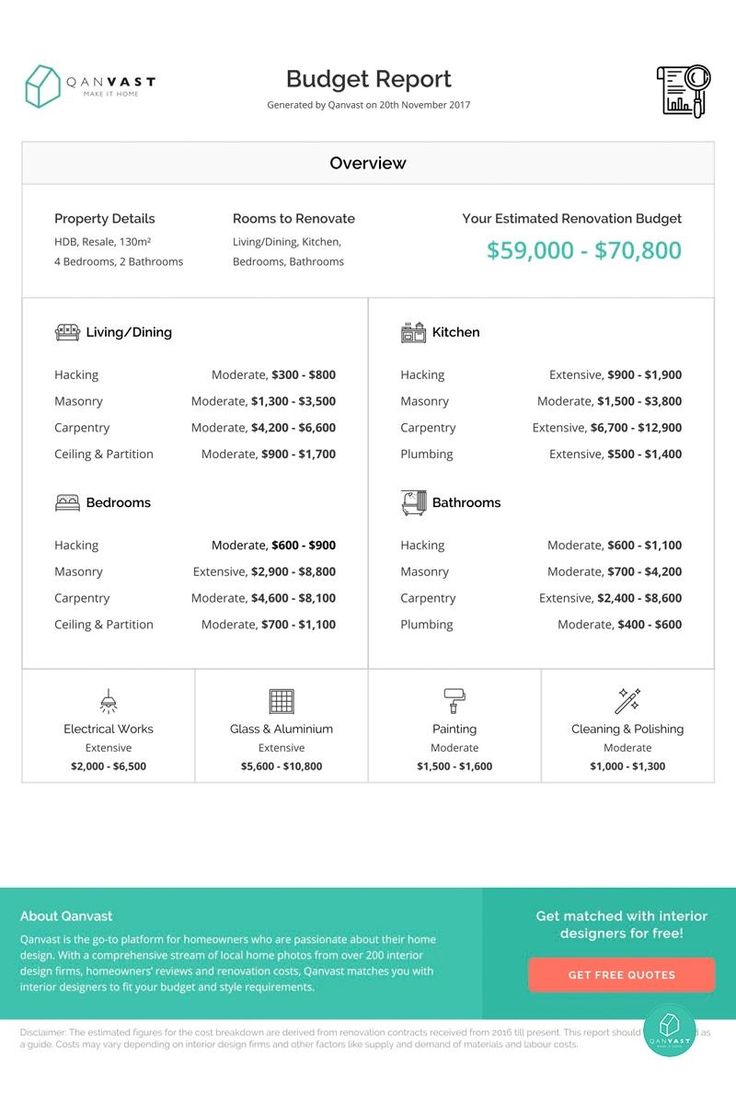


Keep in mind that high-end materials and custom designs can quickly inflate these costs. To maintain your budget, consider mid-range options and DIY tasks where possible.
Bathroom Renovation (15% - $12,750 - $13,500)
With two bathrooms in our example home, allocate around $6,375 - $6,750 for each. This should cover fixtures like toilets, sinks, and showers ($1,500 - $2,500), vanities and cabinetry ($2,500 - $4,000), and flooring and tile work ($1,500 - $2,500).
Upgrading to luxury features can exert significant pressure on your budget, so stick to your budget by opting for mid-range, stylish options and focusing on essential improvements.


Additional Renovation Costs
After allocating funds for the kitchen and bathrooms, you'll have approximately $55,250 - $60,750 left for the following categories.
Living Spaces (25% - $13,812.50 - $15,187.50)
With a significant portion of your remaining budget, improve living spaces like the family room, dining room, and bedrooms. This can include flooring, paint, furniture, and built-ins. Again, prioritize mid-range options to stay within your budget.
Outdoor Space (10% - $5,525 - $6,075)
Creating an inviting outdoor space can enhance your home's curb appeal and functionality. This budget should cover landscaping ($2,000 - $3,000), patio furniture ($1,500 - $2,500), and any necessary hardscaping ($1,000 - $2,000).


To keep costs in check, focus on improving the space with DIY projects, plants, and eye-catching accessories.
Finally, set aside funds for professional services like architectural design ($2,000 - $5,000) and general contracting ($5,000 - $10,000), as well as permits and fees ($500 - $1,500). Keep in mind that labor costs can vary significantly by location, so research these figures for your area.
As you navigate your renovation project, remember that flexibility and adaptability are key. Keep a close eye on your spending, and be prepared to make adjustments as needed. By following this renovation budget example, you'll be well on your way to transforming your home into a space you love – without breaking the bank. Happy renovating!
Related Articles

Boost Your Space: Budget-Friendly Small Kitchen Renovation Ideas
Ever dreamed of a pristine, functional, and charming kitchen but worried about the cost? Fret not! A small kitchen renovation on a budget is absolutely...

Small Budget Bathroom Remodel Ideas
Transforming a small bathroom into a functional and stylish space on a budget is no small feat, but it's definitely achievable with the right strategies. With...
Affordable Small Kitchen Renovation Ideas On A Budget
Transforming a small kitchen into a functional and appealing space doesn't necessarily mean breaking the bank. With a well-planned small kitchen renovation...

Monthly Budget Template Example: Plan Your Finances Today
Managing your financial life is a critical aspect of achieving your personal and professional goals. A monthly budget template is an invaluable tool to help...
Budget-Friendly Kitchen Renovation: Small Space, Big Impact
Are you dreaming of transforming your kitchen into a haven of culinary creativity and organized chaos, but your budget says otherwise? Fret not! Small budget...

Budget Bedroom Renovation Ideas Under $1000
Transforming your bedroom into a sanctuary of relaxation and style doesn't have to break the bank. With some creativity, strategic planning, and budget-savvy...