Renovation Budget Samples for Your Home Makeover
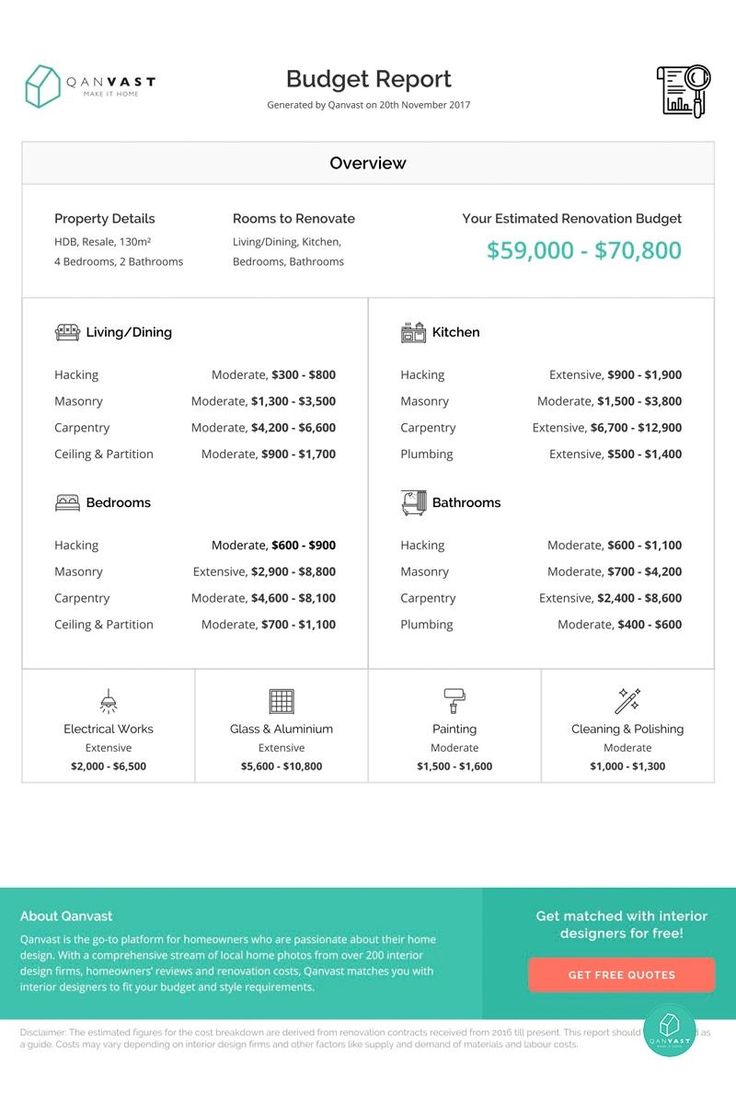
Embarking on a renovation project can be an exciting yet daunting task, with budgeting often being the most challenging aspect. A well-structured renovation budget sample can serve as your roadmap, ensuring you stay on track and within your financial means. Let's delve into the intricacies of creating an effective renovation budget sample.
Before diving into the details, it's crucial to understand that a renovation budget should be dynamic and flexible. It should allow for unexpected expenses and provide room for changes in your project scope. With that in mind, let's explore the key components of a renovation budget sample.
Understanding Your Renovation Costs
To create an accurate renovation budget sample, you need to break down your project into smaller components. This will help you identify all potential costs, ensuring no stone is left unturned.


Start by listing down all the rooms or areas you intend to renovate. Then, for each area, break down the costs into materials, labor, and overheads. This approach will give you a clear picture of the total renovation cost.
Material Costs
Material costs are the most tangible aspects of your renovation budget. They include everything from tiles, paint, and flooring to countertops, cabinets, and fixtures. To estimate these costs accurately, research the market prices of these items and allocate a contingency fund (around 10-15% of your total material cost) for unexpected expenditures or price fluctuations.


Here's a simple way to calculate material cost for a single item:
| Item | Quantity | Unit Price | Total Price |
| Paint (per gallon) | 3 | $40 | $120 |
Labor Costs
Labor costs can significantly vary depending on your location, the complexity of the work, and the experience of the contractors. As a general rule, labor costs should account for around 20-35% of your total renovation budget. To estimate labor costs, get quotes from several contractors and allot a contingency fund for unexpected labor-related expenses.


Remember to factor in the cost of hiring subcontractors like plumbers, electricians, and HVAC technicians, if necessary.
Allocating Funds for Overheads and Contingencies
Overheads are indirect costs that aren't readily apparent but still impact your renovation project. They include permits, inspections, and builder's risk insurance. To estimate these costs, research the fees applicable in your area and add them to your renovation budget sample.
Contingencies, on the other hand, are funds set aside for unexpected expenses. Allocating around 10-15% of your total renovation budget for contingencies can help you handle unexpected challenges without derailing your project.


Permits and Inspections
Depending on the scale and nature of your renovation project, you might need to obtain various permits. Permit fees vary by location, so it's crucial to check with your local building department. Don't forget to factor in the cost of inspections, which are usually required to ensure your project adheres to safety codes and standards.
A typical permit and inspection cost for a medium-sized renovation project can range from $500 to $3,000, but this can vary significantly based on several factors.
Builder's Risk Insurance
Builder's risk insurance coverage protects your property while it's under construction. This insurance covers damages caused by theft, fire, vandalism, or weather events. The insurance premium depends on the total cost of the construction project and the level of coverage but typically ranges from $0.10 to $0.35 per $100 of coverage.
For example, if your renovation budget sample total is $100,000, and you choose a coverage of $80,000, your builder's risk insurance premium would roughly range between $800 to $2,800 per year, or $67 to $233 per month.
So, you've created your renovation budget sample, accounted for every detail, and estimated the Murphy's Law factor. Your project budget is now ready to serve as your compass, guiding you through your renovation journey. But remember, a budget is meant to evolve. Regularly review and update your budget to ensure you stay on track. After all, every wise navigator is also a flexible one.
Related Articles
"Gad Plans & Budget Samples: Your Comprehensive Guide
When it comes to managing our finances, having a clear plan and budget sample can make all the difference between staying afloat and drowning in debt. A...

"Craft Your Perfect Budget: Salary-Based Samples"
Ever wondered how to allocate your earnings to ensure you're living comfortably while saving for the future? Creating a budget based on your salary is the...

"Monthly Budget Plan Samples: Plan Your Finances Today!"
Creating a monthly budget is a critical step towards understanding your income and expenditure, helping you maintain financial stability, and plan for the...

Boost Your Space: Budget-Friendly Small Kitchen Renovation Ideas
Ever dreamed of a pristine, functional, and charming kitchen but worried about the cost? Fret not! A small kitchen renovation on a budget is absolutely...

Transform Your Space: Modern Living Room Makeover on a Budget
Transforming your living room into a modern sanctuary needn't break the bank. With some clever planning, budget-savvy shopping, and diy tricks, you can create...

"DIY Budget Bedroom Makeover Ideas: Transform Your Space for Less"
Transforming your bedroom into a cozy sanctuary needn't break the bank. With a bit of creativity and thrift store prowess, you can achieve a stunning cheap...