Integrating Tech: Top Smart Cities Projects in Urban Planning
As global urbanization accelerates, cities worldwide grapple with challenges such as traffic congestion, resource scarcity, and sustainability. Enter the concept of smart cities: urban planning that integrates technology to address these issues, enhance quality of life, and promote sustainable development. Let's delve into how technology is revolutionizing urban landscapes.
Smart cities harness the power of data and connectivity to optimize city infrastructure and services. This primarily involves Internet of Things (IoT) devices, sensors, and analytics, allowing cities to collect and interpret vast amounts of data. Understanding how data-driven decision-making and innovative technologies are transforming cities is crucial.
Data-Driven Decision Making
At the heart of smart cities lie data centers and analytics platforms that process and decipher insights from IoT devices. These enable city authorities to understand and predict trends, benefiting various sectors.


For instance, waste management can be optimized by predicting waste generation rates and collections times, reducing fuel and labor costs. Moreover, predictive analytics can anticipate infrastructure failures, enabling proactive maintenance and minimizing downtime. This data-driven approach revolutionizes urban management, making cities more efficient and resilient.
City Infrastructure Modernization
Data-driven insights fuel the modernization of city infrastructure, with notable advancements in transportation, energy, and water systems.


Smart traffic management systems use real-time traffic data to optimize traffic signal control, reducing debilitating congestion. Similarly, smart grids monitor energy consumption patterns, optimizing distribution and minimizing waste. Finally, smart water networks monitor water quality and leakages, curtailing water loss and enhancing public health.
Citizen Engagement and Quality of Life
Beyond infrastructure, smart cities prioritize enhancing residents' quality of life through digital inclusion, e-services, and smart public spaces.
Telecommuting hubs, free Wi-Fi zones, and digital kiosks promote e-inclusion and access to online services. Additionally, smart public lighting, CCTV systems, and intelligent waste collection points improve public spaces and enhance security. City apps and digital dashboards allow residents to report maintenance issues, track public transport, and engage with municipal services.


Sustainability and the Environment
The urgent need for sustainability underpins smart cities' development. Environmental monitoring, sustainability targets, and green technologies are integral to their planning.
Smart cities aim to reduce their carbon footprint by integrating renewable energy sources, promoting electric vehicles (EVs), and optimizing energy use. Moreover, smart environmental sensors monitor air and water quality, soil erosion, and noise pollution, enabling timely mitigation strategies.
Urban Mobility and EVs
The switch to electric vehicles is a significant aspect of sustainable urban mobility. Smart cities promote EV adoption through charging infrastructure, dedicated EV parking slots, and incentives like lower taxation and usage fees.
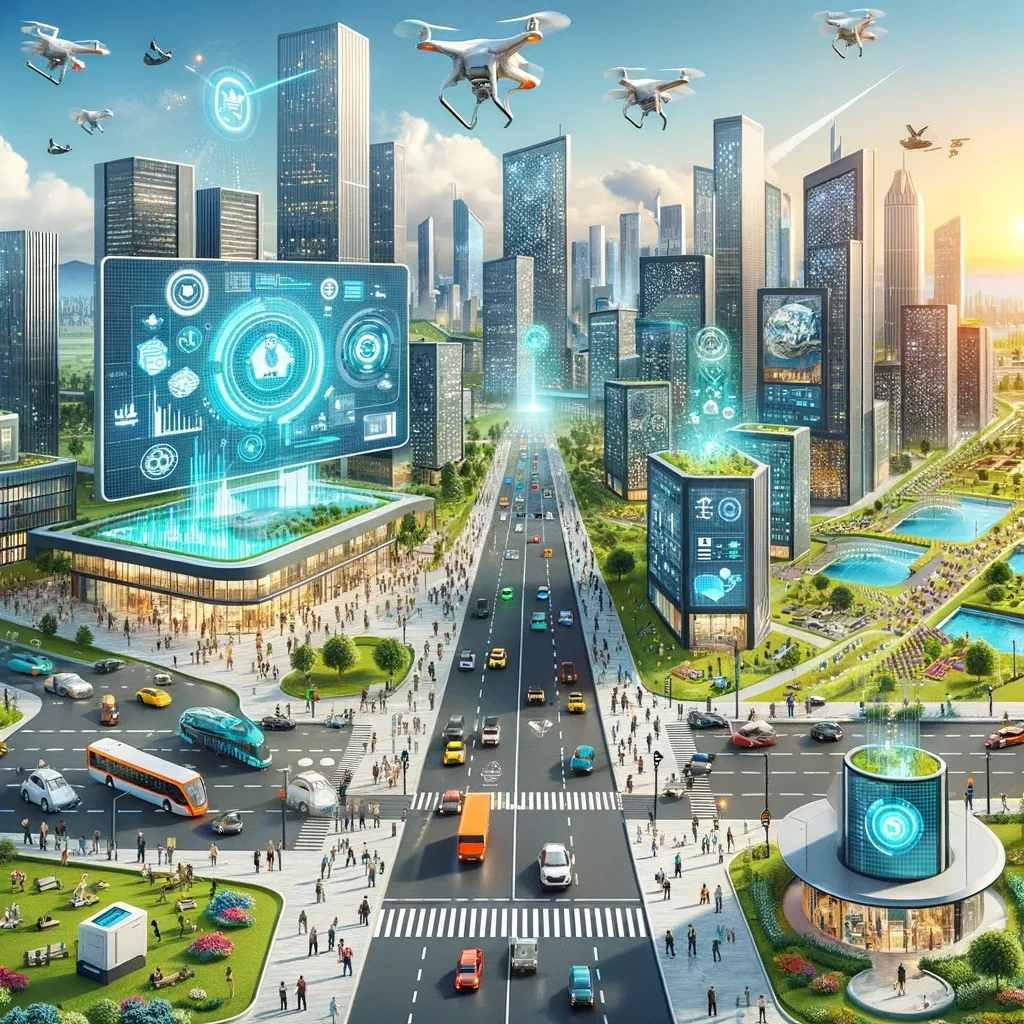


Additionally, smart mobility apps and integrated transport systems minimize emissions by optimizing routes, reducing car dependency, and encouraging public transport usage. Cycling and pedestrian-friendly environments receive priority, further promoting sustainability.
Green Spaces and Urban Agriculture
Smart city planning emphasizes green spaces, part of nature-based solutions that mitigate urban heat islands, improve air quality, and promote biodiversity. Moreover, vertical gardening, green roofs, and urban farms contribute to city greenery while reducing water losses through evapotranspiration.
Urban agriculture, facilitated by aquaponics and hydroponics technologies, ensures local food production, enhances food security, and reduces greenhouse gas emissions from long-distance food transport. Thus, smart cities marry technology and nature, creating thriving, sustainable ecosystems.
Smart cities are not just about technology; they're about people and promoting sustainable, prosperous lives. As advances in technology continue, so will the potential for smart cities to reshape urban environments. Now is the time to invest in innovative, data-driven strategies that anticipate and address urban challenges today and tomorrow. Let's embrace the smart city revolution.
Related Articles

Best Smart Cities in the US: Top Urban Tech Innovations
As the world becomes increasingly interconnected, cities that embrace technology and innovation pave the way for a smarter future. The concept of 'smart...
Smart Urban Planning: Developing Sustainable Cities
Urban planning and development have evolved significantly in the 21st century, with a strong emphasis on sustainability, efficiency, and technology. Smart...

Revolutionizing Cities: Smart Technology in Urban Design
The urban landscape is evolving, and at the forefront of this transformation is the concept of smart cities - urban areas that leverage technology to enhance...

International Journal of Smart Business & Tech
The International Journal of Smart Business and Technology (IJSBT) is a prestigious, peer-reviewed academic publication that bridges the gap between...

Chameleon Tech Smart Meter Troubleshooting
Have you been facing issues with your Chameleon Technology smart meter? You're not alone. While these devices are designed to make our lives easier by helping...

Smart Tech BD: Ultimate 2022 Product List
In the dynamic landscape of modern technology, Bangladesh has emerged as a significant player, offering a wide array of smart technology products that are not...