Smart Cities: The Power of Modern Technologies
The global urban population is projected to reach 68% by 2050, making the concept of smart cities increasingly relevant. Modern technologies are not just enhancing city life but also transforming the way cities function. They're making our urban spaces more efficient, sustainable, and resilient.
Smart cities leverage data-driven technologies and meaningful information to improve the quality of life, drive economic growth, and boost sustainability. From smart grids managing energy consumption to IoT sensors monitoring waste levels, these innovations are revolutionizing urban landscapes worldwide.
Internet of Things (IoT) in Smart Cities
The Internet of Things (IoT) plays a pivotal role in smart city initiatives. It connects devices and infrastructure, enabling real-time data exchange and monitoring. This helps optimize city operations, improve public services, and enhance citizens' quality of life.


For instance, smart waste management systems using IoT can automatically track waste levels in bins. This data can then be used to optimize waste collection routes, reducing costs and increasing efficiency. Moreover, by preventing overflows, it enhances the city's cleanliness and deterrent to pests, thereby improving public health.
IoT Sensors for Environmental Monitoring
IoT sensors also enable environmental monitoring by tracking air and water quality, noise pollution, and other environmental indicators. This data supports evidence-based decision-making, helping cities protect their natural resources and ensure public safety.


For example, during bushfire season, real-time air quality data can help city authorities issue warnings promptly, safeguarding residents' health and even saving lives.
IoT and Transportation
In the transportation sector, IoT can optimize traffic management by monitoring traffic flow and congestion. By providing real-time traffic updates to commuters, it improves road usage, reduces travel times, and eases congestion. Additionally, predictive maintenance of public transport using IoT data ensures minimal disruptions and maximum efficiency.
Smart cities like Barcelona have implemented IoT-based parking solutions, guiding drivers to available spaces, reducing traffic congestion, and optimizing parking revenues.


Big Data and Analytics in Smart Cities
Data is the lifeblood of smart cities. Big data analytics helps cities make sense of this data, providing valuable insights into urban trends, city operations, and citizen behavior. This enables evidence-based decision-making, enhancing city services and improving quality of life.
For example, predictive analytics can forecast future public transport demand based on historical data and external influencers like weather or events. This enables cities to optimize transport services proactively, improving efficiency and reducing costs.
Data-Driven Urban Planning
Big data analytics also supports data-driven urban planning. By analyzing patterns in city data, urban planners can predict future needs, model different scenarios, and optimize city design.


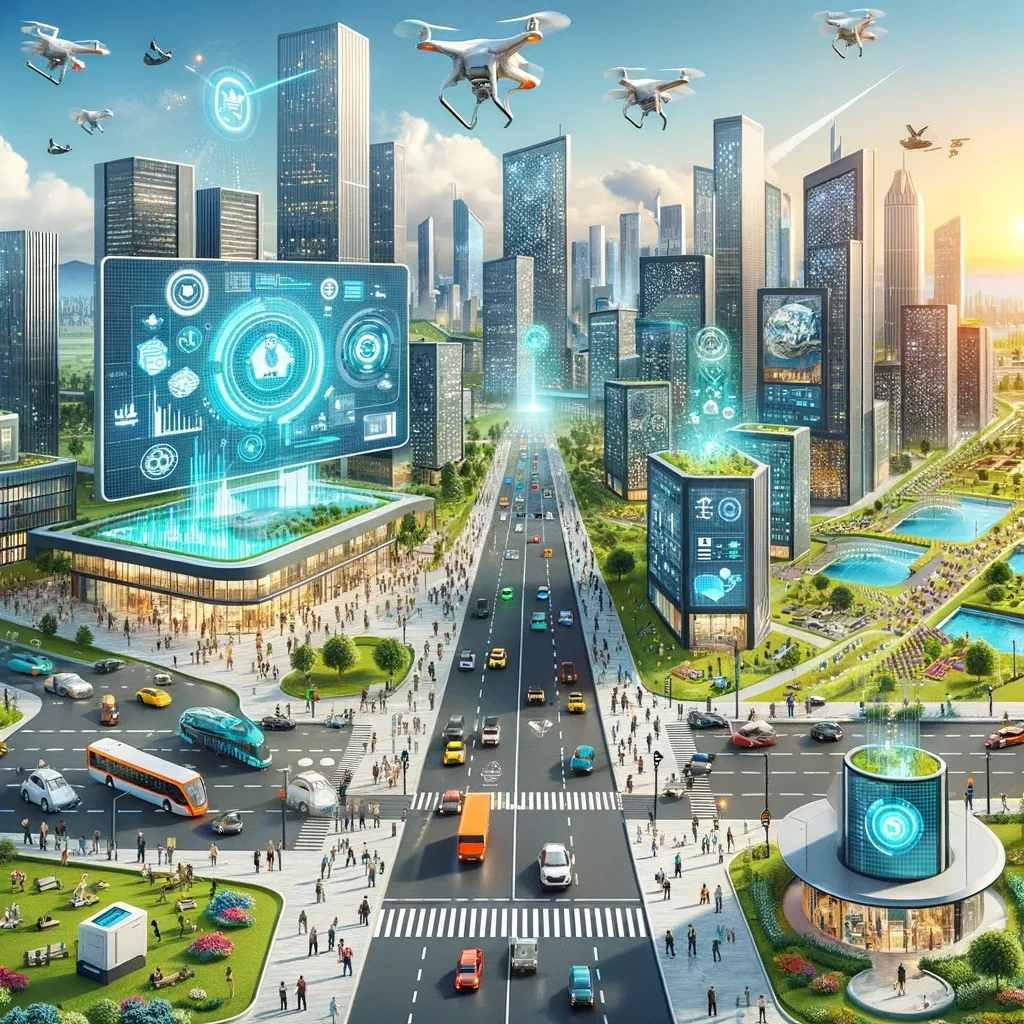


A case in point is Singapore, where the Urban Redevelopment Authority uses data analysis to create dense, eco-friendly cities. Its digital twins of proposed developments enable the testing of various scenarios, optimizing urban designs for sustainability and liveability.
Social Governance and Digital Inclusion
As data and technology become integral to city management, it's crucial to ensure digital inclusion and social governance. This means investing in digital literacy programs, bridging the digital divide, and making city services accessible to all citizens, regardless of their socio-economic status.
Moreover, smart city initiatives must protect citizens' privacy and security. This involves robust data protection policies, secure IoT infrastructure, and ensuring the ethical use of data.
Looking ahead, the future of smart cities lies in their ongoing digital transformation and sustainable development. By embracing modern technologies, cities can become more resilient, efficient, and livable spaces for their citizens. The next step is to implement these solutions ethically, inclusively, and sustainably, harnessing the power of technology to create cities that work for everyone.
Related Articles
Harnessing Progress: Smart Cities Thriving with Modern Tech
Cities are evolving at an unprecedented pace, integrating modern technologies to create smarter, more efficient urban landscapes. This phenomenon, known as the...
Growth of Smart Cities: A Modern Urban Revolution
Imagine a city where technology and urban planning intertwine to create a harmonious, sustainable ecosystem. A place where buildings communicate with each...

Smart Cities: Harnessing Innovation for All with Inspiring Concepts and Technologies
Urban innovation is no longer an aspiration, but a necessity in our rapidly evolving world. Enter the concept of smart cities, where technology and urban...

Smart Easter Egg Decorating Ideas for a Modern Home
Red: Beets or cranberries Yellow: Turmeric or carrot juice Blue: Red cabbage Purple: Blueberries or blackberries Brown: Coffee or tea Chop or grate the...

Modern Smart Kitchen: Upgrade to Intelligent Faucet and Sink
Imagine the convenience and efficiency of a kitchen where faucets and sinks anticipate your every need, and respond intuitively to your commands. Welcome to...

Smallest 4K Smart TV: Compact Power in Ultra HD
In the dynamic world of television technology, the demand for high-quality, immersive visuals has led to the rise of 4K smart TVs. Among these, the smallest 4K...