Smart City Architecture: Vision & Challenges
The concept of a 'smart city' has become increasingly prominent in today's urban landscape, promising a future where technology and city planning converge to create efficient, sustainable, and livable spaces. This vision, however, is not without its challenges. Let's delve into the architectural vision of smart cities and the hurdles that need to be overcome to transform this idea into a reality.
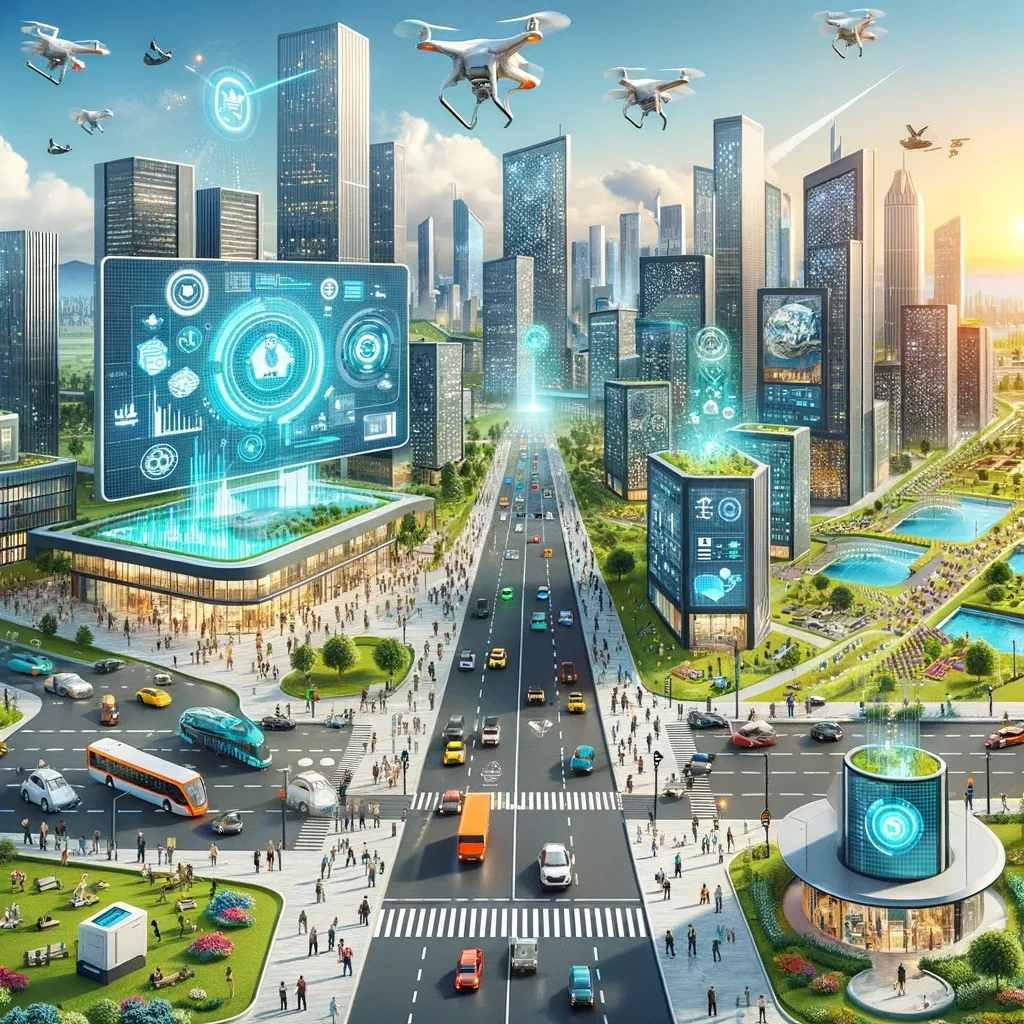
At its core, the architectural vision of a smart city revolves around the integration of information and communication technology (ICT) into everyday urban infrastructure. This includes everything from streets and buildings to public transportation and utilities. The goal is to enhance the quality of life for citizens by improving urban services, optimizing resource management, and promoting sustainable development.
Architectural Vision: The Blueprint of Smart Cities
The architectural blueprint of smart cities is multifaceted, encompasssing various interconnected systems. One of the key components is the city's digital nervous system, i.e., the network infrastructure that connects all other systems together. This backbone enables real-time data collection, analytics, and communication, facilitating informed decision-making and responsive urban management.


Another critical aspect is the design of structures and public spaces to accommodate innovative technologies and encourage digital interaction. This might involve creating dedicated 'smart zones' for testing and implementing new technologies, or designing buildings with integrated sensors and IoT devices. The result is a city that is not just digitally connected, but also 'digitally aware' and responsive.
Smart Buildings: The Building Blocks of Smart Cities
Smart buildings are often considered the building blocks of smart cities. They are designed with energy efficiency and sustainability in mind, integrating systems like smart lighting, temperature controls, and renewable energy sources. Sensors and analytics help monitor and optimize resource usage, reducing waste and maintenance costs. Moreover, smart buildings can generate and share data with other city systems, contributing to the overall intelligence of the city.


Examples of smart buildings can be found worldwide, such as the Pearl River Tower in Guangzhou, China, which uses wind turbines and solar panels to generate its own power, or the Bullitt Center in Seattle, USA, a ‘living building’ that generates all its own energy and processes its own waste water on site.
Smart Mobility: Seamless Urban Transportation
Smart mobility refers to the integration of intelligent transportation systems (ITS) into the city's infrastructure. This includes technologies like smart traffic lights, vehicle-to-infrastructure (V2I) communication, and automated public transport. The goal is to create a seamless, efficient, and safe transportation system that minimizes congestion and emissions.
Cities like Barcelona, Spain, have implemented smart mobility initiatives, using real-time traffic management systems and smart parking apps to reduce traffic congestion and emissions. Meanwhile, cities like Rio de Janeiro, Brazil, are exploring the potential of autonomous vehicles and electric public transport to create more sustainable and accessible mobility systems.




Challenges in Realizing the Smart City Vision
While the architectural vision of smart cities is compelling, turning this concept into a reality is not without significant challenges. Perhaps the most daunting hurdle is the need for substantial investment in new infrastructure and technology. This includes not just the cost of the technology itself, but also the costs associated with its implementation, maintenance, and updates.
Another major challenge is the need to upgrade existing infrastructure to accommodate new technologies. This can be both costly and disruptive, requiring careful planning to minimize disruption to daily life. Moreover, the pace of technological change raises questions about the long-term viability of investments in specific technologies.
Citizen Engagement and Privacy Concerns
A critical challenge is engaging citizens in the smart city transformation. While smart cities can offer substantial benefits to residents, they also require a degree of participation and support from citizens. This might involve everything from using smart city apps to providing feedback on city services. However, engaging citizens effectively will require a sophisticated understanding of their needs, habits, and preferences.


A related concern is data privacy and security. Smart cities generate and collect a vast amount of data, much of which relates to individual citizens. Ensuring the protection of this data is therefore a critical challenge, requiring robust security measures and clear policies on data usage and sharing.
The Digital Divide and Social Equity
Lastly, there's the risk of exacerbating the digital divide. Smart cities rely on digital technologies, but not all residents have equal access to these technologies or the skills to use them effectively. This could lead to a situation where smart city benefits accrue primarily to those who are already privileged, exacerbating social and economic inequalities.
Addressing these challenges requires a holistic approach, combining technological innovation with sustainable urban planning, effective governance, and a commitment to social equity. It also necessitates ongoing collaboration between cities, technology companies, and citizens, so that the smart city vision remains responsive to the needs and concerns of all stakeholders.
Looking ahead, the future of our cities depends on our ability to realize the smart city vision. But this won't be achieved through technological fixes alone. It requires a collective effort to address the challenges and harness the opportunities that smart cities present. After all, it's not just about creating smarter cities; it's about creating cities that are smarter for all.
Related Articles

Jamaica's 2030 Smart City Vision
As the world increasingly urbanizes, cities are Looking to the future to create smart, sustainable environments. Jamaica, too, is embracing this vision with...

Singapore's Eco-Smart City: A Green Vision
Nestled in Southeast Asia, Singapore is transforming into a global leader in sustainable urban development, إذhaчас is its vision to become a City in a Garden...

Vision 2030: Jamaica's Smart City Blueprint
teenth century, Jamaica has amicably joined global efforts to future-proof its urban spaces through the Vision 2030 initiative, focusing on smart cities. This...

Thailand's Smart City 2026 Vision
Thailand's vision for a smart city future is increasingly tangible, with the ambitious project Thailand Smart City 2026 taking center stage. This 20-year...
Jamaica Smart City 2026: A Tech-Powered Vision
interprét de Invest Jamaica , le Smart City project est une vision audacieuse pour façonner l'avenir du pays. Annoncée pour 2026, cette initiative vise à...

Mastering Smart City Security: Top Cyber Challenges & Privacy Concerns
In the heart of urban evolution, smart cities have emerged as interconnected hubs that promise enhanced efficiency and quality of life. However, this...