AI Revolutionizing Smart Buildings & Infrastructure
The integration of AI in smart buildings and infrastructure has emerged as a transformative force, reshaping how we construct, operate, and maintain our urban environments. By leveraging machine learning algorithms, IoT sensors, and cloud computing, AI-driven systems are enhancing efficiency, improving sustainability, and revolutionizing the way we interact with our built surroundings.
Royal DSM, a global science-based company active in health, nutrition, and materials, highlights that smart buildings powered by AI can save up to 30% in energy costs and reduce CO2 emissions by 15%. This convergence of AI and smart buildings presents a tantalizing opportunity for stakeholders, paving the way for innovative solutions and emphasizing the market's immense potential.
AI-Driven Optimized Energy Management
One of the most impactful applications of AI in smart buildings lies in energy management. AI algorithms can analyze vast amounts of data, such as occupancy patterns, weather forecasts, and equipment performance, to optimize energy usage and reduce costs.
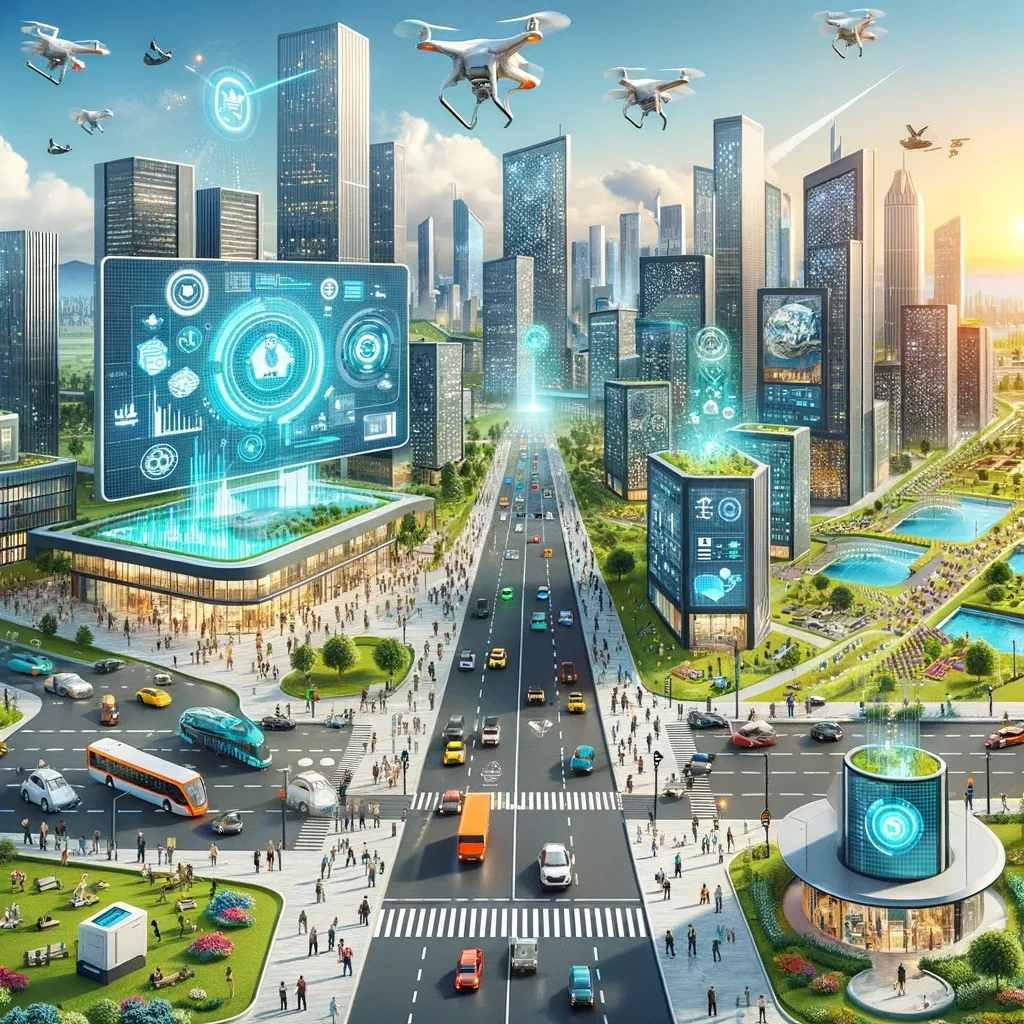


For instance, Google's DeepMind used neural networks to reduce the energy consumption of its-data centers by an impressive 40%. By constantly learning and adapting to changing conditions, AI systems can automatically adjust heating, cooling, and lighting systems, ensuring optimal comfort levels with minimal energy waste.
Predictive Maintenance
AI's predictive capabilities are revolutionizing infrastructure maintenance. By monitoring equipment performance in real-time and identifying anomaly patterns, AI can anticipate maintenance needs before breakdowns occur, saving costs and minimizing downtime.


Siemens, a leader in digital industries, employs AI for predictive maintenance of railroad networks. Their Railigent system analyzes sensor data to predict failures, enabling proactive maintenance that enhances safety and reduces overall costs.
AI for Accessibility and User Experience
AI is also transforming the user experience in smart buildings, enhancing accessibility and personalization. Voice recognition, facial recognition, and touchless interfaces are making buildings more user-friendly and intuitive, while AI-driven apps provide users with personalized information, such as indoor navigation or meeting room availability.
Misap Studio's AI-enabled office design, for example, uses facial recognition to track employee movements, identify areas of congestion, and optimize space usage. This data-driven approach not only enhances user experience but also improves workspace efficiency.


Smart Urban Infrastructure: AI Meets IoT
The intersection of AI and the Internet of Things (IoT) is creating intelligent urban infrastructure systems that transcend traditional boundaries. By connecting and analyzing data from multiple devices and sensors, AI can optimize traffic flow, manage waste efficiently, and enhance public safety.
The city of Barcelona, for instance, has deployed an AI-based waste management system that uses sensor-equipped trash cans to optimize waste collection routes. This has resulted in a 20% reduction in collection trips and lower maintenance costs.
AI for Traffic Management
AI is also transforming traffic management by predicting congestion, optimizing signal timings, and providing real-time traffic updates. Companies like Aimsun use AI to model traffic flow, enabling cities to make data-driven decisions to improve traffic efficiency and reduce congestion.


In Singapore, AI algorithms have significantly reduced average waiting times at traffic junctions, contributing to the city-state's goal of becoming a 'car-lite' nation.
AI and Public Transportation
AI can enhance public transportation systems by predicting passenger demand, optimizing schedules, and providing personalized journey planning. Moovit, for example, uses AI and machine learning to provide real-time transit information and optimize routes, improving overall user experience.
The implementation of AI in smart buildings and infrastructure is still in its early stages, but the potential benefits are undeniable. As more stakeholders adopt AI solutions, we can expect to see significant improvements in efficiency, sustainability, and user experience.
Looking ahead, the proliferation of 5G networks, the increasing adoption of edge computing, and the development of new AI algorithms promise to unlock even more transformative possibilities. The future of smart buildings and infrastructure is intelligent, and the best is yet to come.
Related Articles
AI Revolutionizing Smart Buildings & Infrastructure Market
The integration of Artificial Intelligence (AI) in the smart buildings and infrastructure market has revolutionized the way we design, build, and manage our...

"Revolutionizing Spaces: Smart Buildings Tech & the Built Environment"
The advent of the internet and the rise of digital technologies have transformed the way we design and build structures, giving birth to the concept of smart...

Smart Charging Stations: Revolutionizing EV Infrastructure
In the bustling world of electric vehicles (EVs), one topic that's gaining significant traction is smart charging stations. As EV ownership surges across the...
Smart Building Companies: Revolutionizing Urban Spaces
The advent of the Internet of Things (IoT) has transformed numerous industries, with perhaps no sector feeling the impact more than real estate. Smart...

PMI's Smart Grid Development: Revolutionizing Power Infrastructure
PMI Smart Grid Development Limited, a subsidiary of Power Management Infrastructure Limited, is at the forefront of revolutionizing the power sector with...

Smart Tower Systems LLC: Revolutionizing Vertical Infrastructure
Innovating the vertical landscape: Smart Tower Systems LLC has emerged as a leading force in the tower industry, specializing in the design, manufacture, and...