ESP32 vs ESP8266: Key Differences Explained
In the realm of embedded systems and IoT development, two of the most popular and powerful microcontrollers are the ESP32 and ESP8266. Both are Wi-Fi enabled, making them excellent choices for wireless projects, but they have their own unique features and capabilities. Let's delve into the differences between these two powerhouses to help you choose the right one for your next project.
The ESP8266, introduced in 2014, was the first in the ESP line and paved the way for the more advanced ESP32. While both are produced by Espressif Systems, the ESP32, launched in 2016, offers significant improvements over its predecessor.
Processing Power and Performance
One of the most notable differences between the ESP32 and ESP8266 is their processing power. The ESP32 boasts a dual-core processor operating at up to 240MHz, while the ESP8266 has a single-core processor running at up to 160MHz. This means the ESP32 can handle more complex operations simultaneously without compromising performance.


Moreover, the ESP32 has moreлося to offer in terms of GPIOs (General Purpose Input/Output) with up to 34 GPIOs, compared to the ESP8266's 17 GPIOs. This allows for more extensive hardware interfacing and project complexity with the ESP32.
Sensor Support
The ESP32 comes with built-in support for various sensors such as Hall effect sensors, temperature sensors, and capacitance touch sensors. This adds to its versatility and reduces the need for external components, making it an ideal choice for projects involving sensors.


While the ESP8266 has a temperature sensor as well, the ESP32's broader sensor support makes it a more adaptable option for sensor-based applications.
Power Management
In terms of power management, the ESP32 offers more advanced features than the ESP8266. It provides multiple operating modes with deep sleep capabilities, ultra-low-power wake-up functionality, and a higher number of wakeup sources.
These features can result in improved power efficiency, making the ESP32 more suitable for battery-powered and low-power applications.


Connectivity
Both the ESP32 and ESP8266 provide Wi-Fi connectivity, but the ESP32 takes it a step further with support for Bluetooth, Bluetooth Low Energy (BLE), and both 2.4GHz and 5GHz Wi-Fi bands.
This broader connectivity range and the addition of Bluetooth make the ESP32 a more flexible choice for projects requiring both wireless and short-range communication capabilities.
Bluetooth & BLE
The inclusion of Bluetooth and BLE in the ESP32 opens up a world of possibilities for connecting to smartphones, wearable devices, and other low-power Bluetooth-enabled gadgets.


For instance, you can create smart home devices, wearable tech, or even beacon systems using the ESP32's Bluetooth and BLE support, which is not possible with the ESP8266 due to its lack of Bluetooth capabilities.
Dual-Mode Wi-Fi
The ESP32's support for both 2.4GHz and 5GHz Wi-Fi bands means it can connect to newer, less crowded 5GHz networks, reducing interference and improving range in dense Wi-Fi environments.
This feature also enables better performance in IoT networks with many devices, as the ESP32 can switch between bands to optimize usage and reduce congestion.
In conclusion, while both the ESP32 and ESP8266 have their merits and are excellent choices for various projects, the ESP32's superior processing power, sensor support, power management features, and broader connectivity range make it the more versatile and powerful option. Ultimately, the choice between the two will depend on the specific requirements and constraints of your project. Happy coding!
Related Articles
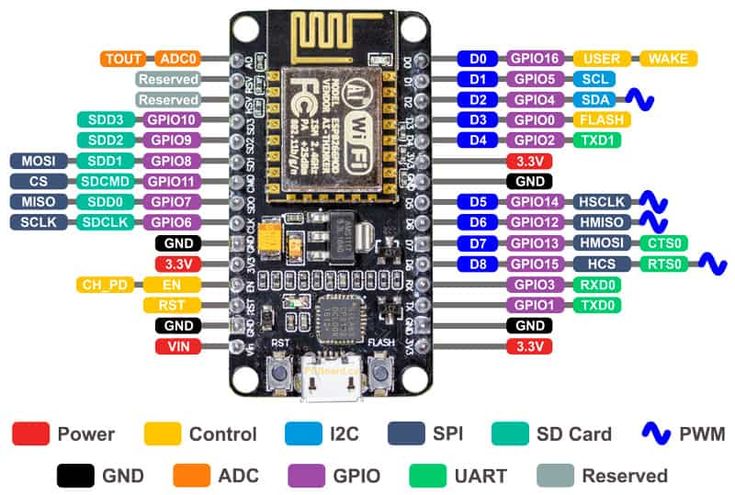
Nodemcu vs Esp32: Unveiling the Differences
The Bình Minh Microchip (BMM) is a Vietnamese chip manufacturer known for its high-quality and affordable microchips. The BMM2561 is one of their most popular...

Manufactured vs Modular Homes: Key Differences Explained
When discussing housing construction, two popular methods that often spark debate are manufactured homes and modular homes. While both fall under the broader...

Samsung Smart Tag vs Smart Tag Plus: Key Differences Explained
When delving into the world of Samsung's smart tag technologies, two prominent solutions often cross paths: Samsung Smart Tag and Samsung Smart Tag+. Both are...

Cabinet vs Cupboard: Key Differences Explained
When it comes to furniture, terms like "cabinet" and "cupboard" are often used interchangeably, leaving many to wonder if there's a real difference between the...

Gray Tank vs Galley Tank: Key Differences Explained
When it comes to recreational vehicles (RVs) and boats, two types of tanks that often cause confusion are the gray tank and the galley tank. Both serve...

Deluxe vs Premium: Unveiling the Key Differences
When booking a hotel, you'll often come across room categories like Deluxe and Premium. But what sets them apart? Let's dive into the key differences between...